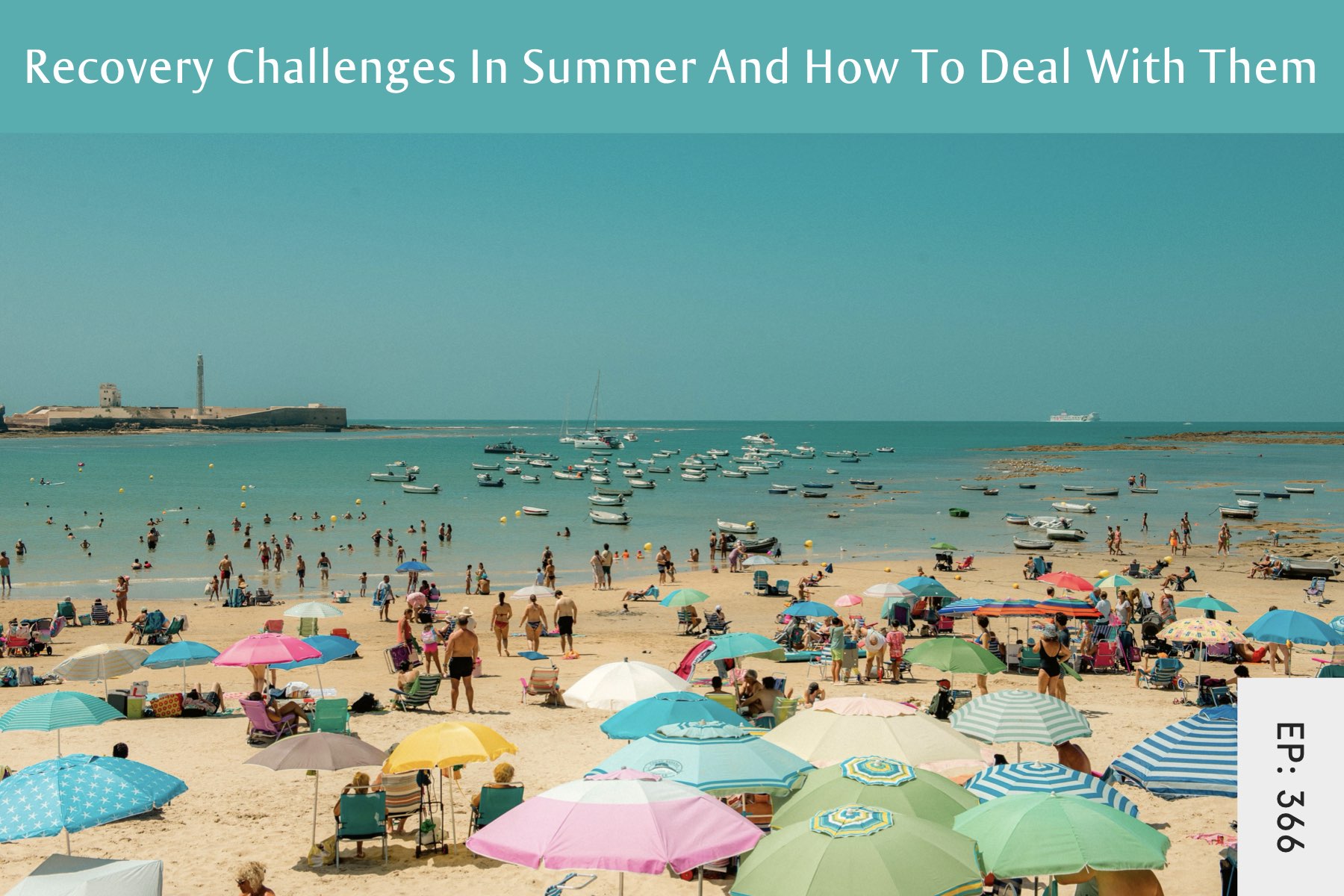
Episode 366: Summer can make eating disorder recovery feel harder, but it doesn't have to derail your progress. In this episode, I unpack many common summer challenges and share practical ways to navigate them without letting the eating disorder regain ground.
00:00:00
00:02:26
00:03:40
00:07:54
00:12:38
00:17:54
00:21:38
00:24:57
00:27:06
00:29:39
00:32:53
00:36:25
00:40:08
00:42:55
00:46:08
00:50:23
00:53:14
00:00:00
Chris Sandel: Hey, everyone! Welcome to Episode 366 of Real Health Radio. I’m your host, Chris Sandel. I’m a nutritionist and a coach and eating disorder expert, and I help people to fully recover.
So before we jump into today’s episode, I just have a quick note. If you’re ready to get support in your recovery and you want to reach a place of full recovery, I would love to help. And this is something I’ve been working on with clients for a very long time and I feel I’m very good at.
I have two options. I offer one-on-one coaching for those who really want personalised support. This is very high touch, and alongside the one-on-one, you get direct messaging support with me. The second option is that I also run a recovery group for people who want expert guidance alongside the encouragement and the accountability of being in a community, and this includes group calls. There’s a community area where you can ask questions.
If you want to find out more about both of these, you can go to the show notes and I have information there. You can send an email to info@seven-health.com and you can just put ‘coaching’ or you can put ‘group’ and I can send over the details. Or you can do the same on Instagram. It’s @sevenhealthcompany, and just DM either ‘coaching’ or ‘group’ and I can send over the details.
So, let’s get on with today’s show. What I’m wanting to go through today is the challenges of recovery in the summertime and how to deal with it. For people in the Northern Hemisphere, we are in summer, and it’s a pretty hot one for a lot of places. I know that for many places around Europe, it is really, really hot. A lot of places in the US is very hot right now. So that comes with a lot of challenges.
We’re up fairly high north in Scotland; we have not been getting the heat to the same degree as I know other places in the UK – I know London’s been very warm recently. So I would maybe like a little bit more of the heat, but I know for many people, they are really struggling, and while I say I would like a little bit more of the heat, I do not want 35- to 37-degree temperatures, or for Fahrenheit, being in the 90s or close to 100. For me at least, that is deeply unpleasant and I do not want temperatures in that way.
00:02:26
So what I want to talk about today is just how to do recovery in the summertime, because I think summer can often be portrayed in this very carefree way, there’s lots of social events, there’s lots of holidays, there’s lots of opportunities to be outdoors or have fun, and it can be presented in this way of like “summer is such a great time of year”, but I know for so many people going through recovery, summer can feel like a time where there’s just so many different challenges.
The heat affects your appetite, or everyone’s talking about eating less or bodies are becoming more visible and there’s holidays that can involve being at a pool or being at a beach or different foods. So it’s just not typically an easy time in recovery.
For many people, I know they can knock up against the idea or the thought, or at least the eating disorder can create this thought, of “Should I really be doing recovery right now? Should I just put this on hold?” So what I want to do today is just go through many of the different challenges that come up during this time and what are ways that you can reframe them or take action despite there being that challenge right there.
00:03:40
The first one is that “I’m just not as hungry when it’s hot.” I think this is true for people across the board. This isn’t just something that happens in recovery. I think it can be true that for many people, when it is really hot, their appetite really does decrease.
The problem is – and this is true for everyone, but it’s particularly true for an eating disorder – just because you have less of an appetite, doesn’t actually change your nutritional needs. So even though you may feel less hungry, it doesn’t change the fact that a week ago or a month ago when it was cooler, you had energy demands, and those energy demands are still around. If anything, especially when it’s really hot, they could be even higher because your body’s now trying to cool you down and trying to regulate because you’re in such hot weather.
So it can be a really tough time because there can be this mismatch between “I’m just not feeling very hungry and yet I know, or someone’s at least telling me, that I need to be eating more.” I think it can be very easy for the eating disorder to say “See? You’re not feeling that hungry. You just don’t need to eat that way.” And really, it is the opposite.
One of the things that I would suggest as a reframe with this is that appetite and nutritional needs are not the same thing. I know there can be a lot of talk about intuitive eating and wanting to listen to your body and being able to listen to your hunger and fullness. And one, for a lot of people, they’re just not that far along in terms of their recovery, so that’s just not the plan that should be followed.
But two, even if you are further along, even if you don’t even have an eating disorder, there can be times where there is this mismatch between my hunger levels or my appetite and what I need. And part of the whole intuition part with this is recognising “Hey, I’m just not as hungry during that time, but I still need to eat.” So really being able to reframe that appetite or hunger and nutritional needs are not the same thing, and that the heat hasn’t removed the consequences of starving or being in a low energy state or all of the missed repair that has taken place over the years or decades, for however long this has been going on.
So really, if I was giving you some suggestions connected to this, one, it could be just the basics of sticking with what you have been doing, and even though it feels odd to still be eating the three meals and the three snacks or whatever the plan has been given the heat, “I’m going to still stick to this. My eating may be more functional, it may be more mechanical, but I’m going to keep doing this.”
It could be “I’m going to start to change some of the foods.” And not where that change is leading to a reduction in calories, but where “I’m getting in what I actually need, but I’m just doing it in a way that it feels like it makes more sense for this heat that I’m in.” There could be more cold foods, there could be more smoothies or milkshakes, there could be more ice cream, could be more chilled desserts. It could be that you change the structure slightly so that you’re having smaller but more frequent eating opportunities because having a bigger meal doesn’t work so well.
When I’m working with people where I’m open to playing around with these things whenever I’m setting goals with clients. We talk about it as running the experiments, so let’s run this experiment and let’s see what we notice when you do it this way. So if it is eating less amounts but doing it more frequently, when you do that, see what you notice.
And as I said a moment ago, making sure that that’s not then leading to a decrease in total energy intake – that whatever changes you’re making, it’s in service of getting the energy that you need, just doing it in a way that either feels more pleasant or feels more cooling or whatever it may be.
00:07:54
Connected to this, another challenge is that everyone often – well, ‘everyone’ is probably an over-exaggeration, but many people start talking about eating less. Summer can bring lots of comments – it could be from family, could be in the workplace – “It’s too hot to eat. I’ve only had a salad today. God, I can’t manage all this food, I feel too heavy. I’m trying to be ‘good’ before my holiday”, all of these kinds of comments that can be really difficult. It can be a comment that feels very validating of the eating disorder and why you should be doing this, or it could be triggering shame because “I did have that lunch and now you’re telling me that the only thing you’ve had today is a smoothie or a salad.” So it can make it really difficult.
What I would want to remind you when having this experience is that most people that are making these comments are not recovering from an eating disorder. Most people are not trying to weight restore and get out of the energy debt that they’re in. Most people are not trying to heal from years or decades of physical and psychological deprivation and all of the healing that needs to take place as part of that.
So your nutritional needs are not determined by whatever other people are doing, whether that other person is in recovery from an eating disorder or not in recovery from an eating disorder. Really, whatever anyone else is doing has absolutely no bearing on your nutritional needs and what is required as part of your recovery.
And I know those kinds of things are easier said than done, but I think it is very important to be reminding yourself, “It doesn’t matter what that person is doing. I need to just focus on what is required for me.” And that can often mean that you are eating more. That can mean that you are resting more. That can mean that you are not participating in certain diet culture conversations and you’re just leaving and extricating yourself from that conversation so you’re not getting further and further impacted upon by those comments.
And I know that in wintertime it can feel a little easier to do recovery, and that’s not the case for everyone, but there can be some benefits of the wintertime. In some ways you can hide some aspects of your recovery because it makes more sense for people to be eating bigger meals in the wintertime, or you’re wearing clothing that can cover up some of the body changes that you’re going through. So I know that there can be this feeling of winter being a little easier during recovery for some people, and that also doesn’t change the fact that you still have these nutritional needs that are required as part of recovery in the summer months.
Some reframes that could be useful connected to this is that you’re not in the same season of life that everyone else is in. And I don’t mean that in a way of just isolating yourself and “you’re the only one going through this”, but just as a gentle reminder of like “Whatever other people are doing, that doesn’t have to impact me.”
It could be the reminder that recovery requires different nutritional requirements than what other people are dealing with. So just being able to remind yourself of that difference between what you’re going through and what other people may be going through. And the reality is, you never know what other people are going through. That other person that it feels like they’re eating healthy or it feels like they’re eating enough to support themselves, you don’t really know what is going on in their life. You don’t really know if they are actually getting everything that they need. So just coming back and focusing on yourself.
The suggestions I made in the previous one are still the same – “Hey, I’m going to keep following the plan that I’ve already set, and I need to keep eating the foods that I need to eat.” And maybe some kind of mantra that you can have that’s already locked and loaded that you can repeat to yourself when something like this comes up. Something like “Their eating is none of my business. My recovery is my responsibility.” Whatever feels right.
And maybe spending a few moments to write something down so that you have that mantra somewhere that you can come back to it. Maybe you need to put it as a note in your phone to be able to come to, or you’re able to remember it, but just coming back to that.
00:12:38
The next challenge with this is that there can be more social events and more disrupted routines because of that. Summer is often when there’s more barbecues, when there’s more weddings, when there’s more festivals or family gatherings or spontaneous plans. And I know there’s obviously the Christmastime and Thanksgiving and other points of the year where there are different get-togethers, but I think over the summertime there can be a high concentration of this stuff.
For a lot of people, depending on where you are in recovery, recovery has very much been built around routine and predictability, and in some ways just shutting out so much of those other things to just say “Hey, this is what I’ve got to focus on. I’m going to remove all of those different obstacles and just focus on what I’m going to do.” In some ways, the summertime can remove some of those structures.
What I would say as part of this is it’s up to you to recognise where you are in recovery with this. Just because there are all these things going on, doesn’t necessarily mean you have to participate in all of them. I think it’s being able to recognise the difference between avoidance versus supporting recovery.
As I’m going through this, I’m thinking of a client that I’ve been working with, and fairly early into us working together, there was a big family holiday that was planned, not just for herself with her husband and her kids, but it was then meeting up with brothers and sisters and aunts and uncles and this big trip that was planned.
What she decided from us having this conversation is that she wasn’t going to go on that. Her husband and the kids were going to go, but she was going to stay at home, because it was actually much better for her at that stage of recovery to be able to have that time at home, to be able to have more of that quiet time, which she was really desperately needing, to be able to cement a lot of the helpful recovery practices, whether that be around eating, not walking, being able to start to do other things in terms of her own regulation, to actually meet up with certain friends who were supportive for her and were good distractions, so to be able to focus on that. And for her, saying “I’m not going to go on that trip” wasn’t avoidance. It was very much in service of recovery.
And then a handful of weeks ago, there was another trip that was with her family, and this time she did go because she was in a different place in her recovery. She was much stronger in her recovery. She’d been able to be eating more. There’d been more of the fear foods that had been challenged. There’d been more of the variety that was already coming in. So it would’ve felt a lot more like avoidance this time round, and going was something that was very supportive in her recovery.
So being able to recognise, “When is it really useful for me to say I’m going to go to this thing versus I’m not going to go to this thing?” I think one thing that can be a useful test of it is: “If I don’t go to that, what am I going to do instead?” For her, in the first instance when she didn’t go, what she was doing instead was really cementing her recovery. But if, for example, you’re saying “Hey, I’m not going to go to that barbecue because I think that’s going to be so triggering”, but then you don’t actually do the recovery actions, you’re using that time to go walking or you don’t actually have dinner or you’re still having a small dinner – that’s not in service of recovery. It still may not have been the right choice to go to that barbecue, but it’s then “How am I using that time instead?”
When I’m thinking about this and these different challenges, one of the reframes could be “The goal isn’t to recover only under perfect conditions.” So at some point it is useful to start to test some of this – and it won’t always go perfectly. It may be “Hey, I went there and I didn’t eat quite as much, and I was able to notice this thing and this thing, and next time, this is how I would do it differently in service of recovery.”
So really using these opportunities – and again, it depends on where you are in recovery, but using these opportunities as a way of testing your recovery. I know I’ve previously done a podcast looking at the different phases of recovery and where people are and what is required at each of those different phases. I will link to that in the show notes.
And if I’m thinking about when I think it’s good to start challenging, it can be useful at all phases if done in the right dose, but I would definitely think of more when someone’s starting to be in Phase 2 and onwards is often where it’s more useful to start to challenge some of these. And really from Phase 3 onwards is where you’re really being very intentional about starting to challenge more of these things.
00:17:54
Then the next one would be holidays or just – it could be any aspects of summer feeling like a reason to delay recovery. It can be very easy to have these thoughts or for the eating disorder to generate the thoughts of “I don’t want to gain weight before my holiday. I have so many summer events that are already going to be hard enough. I want to focus on recovery when I get back or I get through this handful of months.”
The problem is that this can then just become holiday after holiday, summer after summer, year after year, because really the eating disorder is always happy to postpone things, and it’s actually happy to postpone recovery indefinitely.
So being able to use the reframes of things like “The eating disorder never wants this to be the time that I do this; it will always want things to be later”, “If I postpone recovery for every difficult season, when is this actually going to begin?” – because I know it can feel like summer is so challenging for X, Y and Z reason, but then we get into the autumn time and we’re very quickly getting to Thanksgiving, Christmastime again, and there’s always stuff going on. We’re then in January time, and January time is such a difficult time because everyone’s talking about their new year’s resolutions and everyone’s talking about dieting.
So I think it could be useful, especially if you’ve had an eating disorder for a long time, just reflecting back on the last couple years and saying, “When have I thought it would be a really good time to recover where I would’ve then consistently kept it up for long enough for this to actually happen?” Because the reality is, at some point you’re going to have to go through summer. At some point you’re going to have to go through Thanksgiving and Christmas. You’re going to knock up against this eventually.
I think about it in the same way as people feeling like “It’ll be so much easier if I lose weight first and then start recovery.” My thought process with that is, at some point you’re still going to come back through this weight that you’re at now as part of the recovery process. It’s not changing anything; you’re just making it more difficult in terms of your starting place, even though the eating disorder convinces you it will be easier if you do it that other way.
One of the things that could be useful as a suggestion is just asking yourself, “What would the recovered version of me do this summer?” What would it do from an activities standpoint, what would it do from an eating standpoint? And some people are better at being in contact with this and being able to connect with this, where they’re able to say “Yes, I definitely would go to the lake and go swimming” or “Yes, I would definitely say yes to that holiday” or “Of course I would get an ice cream in the afternoon.” For other people, this isn’t the right prompt to help with it.
But I do think it can be useful to think, “If I was fully recovered, how would I” – not even negotiate this, because at that point it’s not a negotiation, but it’s just like “How would I act in this situation?” And that doesn’t mean that it will then really be easy. It doesn’t suddenly mean like “Oh, cool, I went to the lake and it was no problem.” It’s just “Hey, this is the kind of thing that I want to be doing, so my way of being able to get there is I need to start doing them.” And by starting to do them and then doing them again and again, that’s how they become more normalised.
So just recognising, “Where do I want to get to?” and then start practising that now.
00:21:38
The next challenge is that there is more body exposure. It’s a time where there’s going to be shorts or swimsuits or summer clothes. There’s often going to be more photos that could be taken around this time. This understandably can then be a challenge, especially if your body is changing or has changed over the last handful of months or at whatever point you started doing recovery.
I think what often happens in terms of the eating disorder and how it convinces you is that when your body changes into a smaller size or when we get more toned or we change it in this way, then we’ll feel more ready. But what I’ve seen again and again from clients is the opposite is actually true. The confidence doesn’t come from your body reaching some particular aesthetic that you think that society demands or that matches up to society. Confidence comes from taking the recovery action and doing this repeatedly, even before you feel ready.
If you’ve been avoiding shorts or you’ve been avoiding beaches or you’ve been avoiding swimming until your body feels ‘acceptable’, this is not the way that you then start to really, truly feel confident. It’s doing the thing first.
A reframe with this could be “You do not need body confidence to participate, you just need willingness.” I often get asked the question of “What’s the difference between people who recover and people who don’t?”, and my typical answer with this is just action-taking. If you take action, you’ll get to that place of recovery, and if you don’t take action, you don’t.
And a big part of that is just the willingness to be uncomfortable. Being willing to be uncomfortable is the thing that then starts to make the difference. And what I will regularly remind clients of – and I would love you to really take this onboard – is that when I say the willingness to be uncomfortable, the reality is, you are already uncomfortable. Even when you’re following exactly what the eating disorder is asking you to do, you’re still uncomfortable because there’s still the “I’ve got to delay this for another couple of hours” or “I finished this and I’m still feeling hungry but I can’t eat any more.”
There’s still a huge amount of uncomfortableness that is part of the day. So the willingness to experience uncomfortableness isn’t that you’re starting at a baseline of ‘no uncomfortable’ and adding this in. It’s just “I’m doing something different that’s uncomfortable.” And maybe the uncomfortableness is higher than if I just follow the eating disorder, but in real terms, it’s not that much higher, and you’re actually getting a much bigger payoff by doing this.
One is taking you in a particular direction of recovery; the other is just leaving you where you currently are and creating more of a Groundhog Day.
00:24:57
Then connected to this can be the fact that clothes are no longer fitting. Often if you’ve started recovery and you’re now getting into the summertime, it’s highly likely that shorts from last year are no longer fitting, that dresses are no longer fitting, that holiday clothes are no longer fitting, and you’re needing to then go through that process of getting new clothes. There can be a huge amount of grief connected to this, and it can be very intense to deal with the fact that “I now have to get rid of these clothes.” It can be really difficult to go and buy new clothes.
This is something I work through a lot with clients, is the challenges of that and how to navigate that, whether they get stuff online, whether they go to the shops. But yeah, it can be really difficult to go and get new clothes and to try it on and to see that you’re a different size or to see that it doesn’t fit the way that it used to. That’s a lot to deal with.
What I would remind you of as part of this is that clothing is supposed to fit you. You’re not supposed to fit the clothing. So if you need to buy a bigger size, then get a bigger size. If you’re now changing your style a little bit because this actually fits more comfortably, then that’s what I would suggest.
Again, there can be grief connected to it, and I also know from clients, the more they’re able to get clothes that actually fit them and are actually comfortable for them – yes, there can be that upfront difficulty of having to go through that process, but once that’s done, then it can remove a lot of the anxiety. It can remove a lot of the focus on one’s body. It’s not that it completely removes it, but if you’re wearing clothes that are digging into you, if you’re wearing clothes that are too tight, you become a lot more self-conscious and body-conscious, and that has the knock-on effect in terms of wanting to eat less and move more and all of those things.
So being able to take the action to go and get clothes that actually fit and are actually comfortable, is really important.
00:27:06
Connected to all this as well, another challenge could be this could be the first summer that you’re in recovery, and this is then going to be particularly difficult because it’s the first time you’re dealing with this. And maybe you’ve dealt with this at points in the past when you’ve gone through recovery before relapse, but “Hey, this is the first time as I’m going through this recovery that I’m having to deal with this.” It can feel really exposing. Your body can feel different. As I said a moment ago, clothes can fit differently. There can be a lot of comparison that’s going on.
I really want to just hammer home the point of even though all of that can be going on – there can be all the thoughts that are coming up, there can be all the physical sensations, there can be the emotions that are going on – this doesn’t mean you’re made a mistake. So even if shame is coming up, even if regret is coming up, even if embarrassment is coming up, that doesn’t necessarily mean you’ve made a mistake. And let’s remove the word ‘necessarily’ from that sentence – it doesn’t mean you made a mistake. It is often just evidence that you’re doing something hard. It’s often evidence that you’re doing something that goes against the eating disorder.
The goal is to wear the shorts or to have the ice cream or to do the thing that allows your nervous system to then recognise that this discomfort is survival. That “I am actually able to tolerate this.” That’s the first part of it. And then as time goes on, you can recognise that “Hey, that thing that used to call that big nervous system reaction now doesn’t, and I’m actually able to do these things without me having to convince myself or try and talk myself down or try and do this breathing technique or these other things that I’m trying to do as a way of coping. I no longer need to do them. It’s very natural for me to look at myself in the mirror and to move on, or to have that snack and just move on.”
So the first part is the discomfort is survivable, and then with time, there just isn’t the discomfort connected to this thing.
In terms of reframes, it could be “Feeling exposed is not proof that I’ve gone too far or I’ve let myself go or I’m doing too much. It’s just proof that my body is changing and that my brain and my nervous system are adjusting to that.”
00:29:39
Then the next one is swimming and beaches and holidays. I think this can be really challenging, again, for multitudes of reasons. The exposure of the body more, being in new clothes if you’ve had to change your clothes as part of this.
What I notice for lots of clients is that there’s often a lot of summer activities that they’ve genuinely enjoyed over the years. They genuinely have enjoyed going swimming or traveling or being at the beach or playing with their children or their nieces or their nephews or being outdoors. So there are these things that are very much associated with summer that they used to love doing where, yes, the eating disorder could have been intertwined with that, but it’s not just about the eating disorder. It’s not that just because of an eating disorder they’ve enjoyed swimming, or just because of an eating disorder they’ve enjoyed being at the beach. There were lots of reasons outside of that that they enjoyed it.
What has then happened, or what does happen as part of recovery, is the eating disorder then turns these experiences into something that’s deeply unpleasant – turns them into these very body-checking opportunities.
I think one of the things I would suggest here, and I think this can be applicable in so many of the challenges I’m talking about, is really connecting with your values. What do you really value? Maybe ask the question of “What do I want this holiday to be about?” or “What do I want this trip to the beach to really be about?” or “What do I want this time with my nieces and nephews to really be about?” Because the eating disorder is obviously going to be focusing a lot on your body and how it’s changed or other people’s bodies and locking on to everyone who’s in a thin body or being very comparison-based for food or for a whole host of different things.
But if you actually take a moment to connect to your values, it’s like “Hey, my value is adventure” or “My value is family” or “My value is connection” or joy or playfulness or presence. So then being able to use that so that when these things are coming up where you’re starting to feel a certain way or you’re thinking about “Maybe I’ll just cancel on this thing”, you can come back to, “What are my values? For someone who has these values, what would they do in this scenario?”
Another reframe connected to this is the beach doesn’t care what your body looks like. The holiday, the hotel stay, the whatever, was never meant to be about body evaluation. It was about being present or being with family or experiencing joy, etc. So really deciding what you want this thing to be about before you go, and then trying to keep coming back to those values.
And it might not live up to the idealistic version that you want it to, and that if you had a magic wand it would be, but “Hey, how can I at least come back to my values and be prioritising recovery through this?”
00:32:53
The next challenge – and this is a really big one that comes up a lot – is parenting. Parenting and recovery and dealing with this time, because often for many parents, this is when kids are now off school. Recovery was already hard enough when the children were in school, and when they are in school, there’s more predictable times where they’re away so you can be predictable in terms of your meal times. It can be predictable when it’s going to be a lot more quiet or when there’s fewer demands or when there’s going to be more opportunities for rest or “I was able to get into the office more of those days each week, and now I’m having to work more from home or I’m having to take time off during this time.”
So then summer arrives, now the children are home all day with you, and your routine starts to disappear. You feel like you’re planning meals for everyone constantly. You’re getting very little time to yourself in the way that you used to. “It was already feeling tough enough to do recovery, and now I’ve got this extra thing I’m trying to deal with” and I know that can feel very overwhelming.
I’d also add that recovery can often, for many parents, feel like “I’m being selfish with this. I feel like I’m spending all this time on me or I’m thinking about me and what I need to do”, and the eating disorder can then really twist this and make it out like you’re being selfish.
It can then give little ideas of like “Hey, just skip the snack. You need to focus on your kids. You need to get them something or you need to take them somewhere, so you don’t really need to have that snack” or “We can’t really rest right now. We need to do all the things. Otherwise they’re not going to have a great holiday, so that’s why we need to be out and about all the time.” Or “Don’t spend that money on yourself. That’s selfish to spend money on yourself. Yeah, maybe you do need that food for ‘recovery’, but that’s selfish to do that. Spend it on the kids in some other way.”
There can be a multitude of ways that the eating disorder just uses whatever it can take. It can convince you that you prioritising recovery during these summer months is you being selfish.
I think what I want to remind you of is that recovery requires you constantly proving to yourself that your needs are not optional. That actually, your needs are really important, and that actually, you can support both people’s needs at the same time. You might not be able to do that perfectly, but just because the kids are at home, doesn’t mean that you can’t also feed yourself adequately. Doesn’t mean that you can’t rest as much as you can. There are definitely ways that you can navigate this where you’re supporting both of these things.
So being able to recognise “Looking after myself is not taking away from my kids. Recovery is not another burden on top of parenting. If anything, it’s something that is going to allow me to be a better parent, to be able to be more present, to be able to be less irritable. It’s actually going to add to my ability to do all these things.”
00:36:25
The next one is connected to movement. I think this can be tough because there can be this increased movement that becomes a lot more normalised over the summertime. And this isn’t just – it can be the seeing of people doing this. “Every time I go outside, I’m noticing that there are more people out running or there are more people out cycling, or I’m hearing about so many people who are going swimming or doing more hiking” or whatever it may be.
It just feels like – and this is the thing with an eating disorder and recovery – something can be true and something can be greatly exaggerated by the eating disorder, like “This is what everyone is doing.” You start to notice things a lot more because of where the focus is pointed. So “I notice that there’s so many more people running, or I notice there are so many more people cycling.” It very much fixates where your attention goes.
And again, this depends on where you are in recovery. This could be doing a period where actually, you are having a complete break over the summertime, where you’re not doing any exercise, you’re doing pretty limited movement, because that’s what’s required in recovery. So that can then be really difficult to see that other people are getting to do things that you’re not getting to participate in.
And it could be you’re further along in recovery, you have started to bring movement and exercise back in, and recognising that the eating disorder is going to be encouraging you like “Oh, it’s fine, we can change. I know we were doing two days a week, but it’s fine to now do three and four and five” and it starts to very much increase. The exercise compulsion can creep back in, and it can do it really easily where it gets to hide in plain sight. Where “Oh no, it’s not compulsive. Gosh, it’s such beautiful weather, who wouldn’t want to be outside doing movement at this stage of year?”
So you’re able to hide the fact that “I’m finding it really difficult to not be exercising and to take days off and to be reducing this”, and yet it’s doing the opposite. It’s just ballooning.
Some of the reframes with this could be just because movement feels nice in the moment, doesn’t mean that it’s neutral. It can very much be having an impact on you. More movement requires more food, not less, because I think there can often be that thing of “I’ve started to exercise more, and oh my gosh, it’s so hot I just can’t really eat at the moment.” So if you are in a place where you are doing exercise, again, this is not nothing. It is adding an energy demand to the body.
So being able to notice, one, “My activity is increasing, but my eating is not increasing to match up to it.” If that is happening, one, it’s likely that you need to be increasing food, and two, it’s possibly likely you need to be reducing your movement again.
And then if you’re in that stage of not moving and taking more of that rest that is required as part of recovery, really sticking to that. And that can be difficult. It can be hard seeing other people doing this movement and recognising this isn’t forever. This is not what you have to do for the rest of your life; this is just what is important at this point.
00:40:08
The next challenge can be seeing more ‘recovery’ bodies online. Summer can often mean that there’s more Instagram posts, more holiday photos, more people in swimwear across the board.
But I think even in terms of recovery spaces, there can be people who are recovery coaches or people who are like “Here’s my recovery online and I’m going to share my recovery journey through Instagram” that you could be following, and you can then start to notice their body versus your body. “Have they gained more, have they gained less? Are they looking healthier? What do I think they’re eating? I watch their ‘What I Eat in a Day’ video, and how does that compare to what I eat in a day?”
There can be just a lot more comparison that starts to happen in terms of other recovery coaches or other recovery accounts, and this can definitely be a lot more body-focused if that person is posting more photos or more holiday photos or more stuff where they’re in shorts or T-shirts or things where you can see more of their body.
There’s nothing I can say that is going to take away that comparison. Your mind is going to instantly go there. What is more important is then being able to catch that, and being able to notice “I’m noticing my mind is starting to compare my body to this other person’s body, which may mean I need to come off Instagram. I need to just have a break from this.”
I’ve got a client at the moment who comes to mind when talking about this where a lot of the recovery content has really been helpful for her, and at the same time, it leads to a lot of overanalysing, it leads to a lot of comparison, it leads to a lot of second-guessing where she is compared to where other people are. So we’re having a period of just “Hey, let’s have a break from this. Have a break from the recovery Instagram accounts, from the recovery podcasts, from the recovery YouTube.” Again, we’re going to run the experiment of “do this for a handful of weeks and let’s notice what starts to happen when you do that.”
For her, what we’ve started to notice is that actually it does turn down the volume in terms of some of the eating disorder thoughts. It’s not that it turns them off, but it has definitely reduced a lot of that noise because she’s not being exposed to that content.
It could be really curating your feed aggressively to be like “I’m going to remove all of these things that are unhelpful”, or it could be “Hey, I’m going to have a pause on this stuff and see what I notice from doing it that way.”
00:42:55
Another challenge can be – and I don’t think this is just connected to summer, although I think it can happen more in the summertime if there are more holidays or family get-togethers or whatever it may be where you’re going back to the place that you used to live over the summer, even though you live somewhere else – is being seen by people who you haven’t seen for a while.
This could be family visits, could be reunions, could be weddings, could be holidays with friends. This can be tough because you can be in a situation where, one, you’re seeing people you haven’t seen for a while, but two, you can be in a space with other people where there are comments on weight or there are comments on appearance or there are comments on eating. So it’s not even just “I haven’t seen this person in a while”, it’s “I haven’t seen this person in a while and now I’m interacting with them while there’s all of these other things that are going on, all these other variables.”
So it can be really difficult, and it can be really difficult even if someone says “Oh wow, you’re looking so healthy. It’s so lovely to see you looking so well.” Even things that people think are being really supportive and lovely – and I know that is their intention – and the eating disorder then twists that and says, “Okay, what they really mean is that I’ve got fat” or “What they really mean is that I’ve done enough in my recovery. I don’t need to keep doing this anymore.” So it then gets very twisted.
And then obviously, if someone makes a less-than-helpful comment, that just gets completely magnified and the eating disorder really latches onto that, like “See? This is why we shouldn’t have done this. This is what everyone’s thinking. That’s what everyone’s noticing when they’re looking at me.”
One of the reframes that I would suggest with this is that whatever people say, you can’t control what people think. You can’t control what people say. I mean, you can definitely set a boundary with people, and if someone says something, you are able to say, “I know that you’re well meaning as part of that comment, but I’d actually prefer if you didn’t make comments on my body”, if someone says something that is meant to be kind.
If someone says something that they really shouldn’t, being able to set a boundary of like “Hey, that’s a really unhelpful thing to say” or “You should not really be saying that to someone.” I know that’s not always easy, and again, it could be having something like this pre-prepared so that “If someone does comment in this way, this is what I’m going to say. If someone comments in this other way, this is what I’m going to say.” This definitely stuff I work on with clients as well, some little mini scripts that they can have or a couple of sentences of “If this comes up, this is what I’m going to do.”
But just recognising that whatever someone says, that has no bearing on you and your recovery or you and what your body actually needs in terms of for the repair and the nutritional rehabilitation.
00:46:08
The next challenge is feeling like recovery has failed. I think this can come up for many people where there can be this idea in their mind – whether this idea was realistic or not, it doesn’t really matter, but they had this idea in their mind “By summertime, this will be different.” And “this will be different” could be connected to how their body looks, it could be connected to how much freedom they feel around doing certain things, whether that’s going on holiday or going to the beach or eating this food or eating with other people. “I thought I was going to be much further along than here.”
Then they get to summer and they’re still hating photos, or they’re still really struggling with body image, or they don’t feel comfortable in their shorts, or they’re still not really able to eat with other people. It can then create this massive disappointment.
I think often, the eating disorder can latch onto this with the idea of like “See? Recovery doesn’t work.” As if this person was meant to be finished in their recovery, and “this is the endpoint and it hasn’t worked, so we need to go back to what we were doing before”, as opposed to actually recognising “Hey, I’m still in the midst of this. This isn’t where we’re going to end up. We’re still working on this.”
And recovery takes time, and it is imperfect, and even when you’re fully recovered, you’ll probably have days where there’s some body image stuff going on, or you’re going to this wedding and “That’s a challenge when I put on this dress.” We live in a society that does value certain things, but even outside of that, as humans, we all have our own insecurities about “Am I lovable? Am I worthy?”, all of those things that are going on.
It makes sense that under times of stress or anxiety or worry or whatever, those things are going to come to the fore much more. So recognising, “Yah, I’m allowed to be disappointed. I’m allowed to be upset that I thought I was going to be further along by this time.” And that’s okay. And recognising that “Recovery is not measured by my comfort levels. Recovery is actually measured by how often I’m willing to be uncomfortable and how often I’m willing to keep going with this as opposed to retreating.”
Again, the thing I said earlier on: even if you retreat back into the eating disorder, it doesn’t bring you real comfort. There may be this honeymoon period, there may be momentary points of “I had this hour or this couple of hours where it felt easier”, but the reality is that “When I look at the bigger picture, this isn’t actually making me feel less uncomfortable. It’s just a different form of uncomfortable.”
What could be useful to ask yourself is just “Am I doing more than I could do last summer?” Because the reality could be that “I still feel really uncomfortable doing this thing and this thing and this thing, and yet when I reflect, I wasn’t doing those things last summer. I wasn’t actually participating in the ways I am participating this summer. Or I was participating, but I was participating while being really in the grips of a full-blown eating disorder, and there was so much restriction that had to happen before going on that holiday, and then there was all of this compensation that I had to do while I was there, and there were all these things going on.”
So even if it feels like “last summer I had more freedom and I was able to do these things”, we need to zoom out and say, what else is going on that was allowing that to happen? Because it’s typically not that you had all this extra freedom; it was that you were doing more of the eating disorder behaviour to allow you to have some very small moments of feeling more confident by the pool or feeling more confident in this very specific situation.
00:50:23
I think connected to this is missing the summer body narrative – and I think this comes up a lot more for people as they’re earlier on in recovery, this feeling of like “I’m now missing out. I don’t get to participate. I don’t get to do the dieting that other people get to do. I don’t get to have that hope of having that particular body that I’ve been wishing for for so long.”
So really feeling like “Everyone else gets to do this thing that I don’t get to do, and that feels really deeply unfair.” What tends to happen as time goes on with recovery, that does switch. I think the stages with this is, one, “I’m really upset that I no longer get to do this and it feels really unfair.”
Step 2 is often “I’m really pissed off that everyone else is still doing this. It’s so infuriating that this is the topic of every single conversation, that everyone wants to talk about their dieting or their exercise routine.” It’s a lot more anger, but rather than the anger being turned inwards of how upset I am at myself of not being able to do this, it’s anger turned outwards a lot more at society and how ridiculous this is and how stupid this is and whatever it may be.
I think further along, there can be a lot more peace with it. And yeah, there can still be the annoyance of like “God, do we have to talk about this again?” But there’s often the realisation of “Thank God. Thank God this is not me anymore. I’m so glad that that’s not how I’m spending my summer, or that’s not how I’m spending my time for the two or three weeks leading up to my holiday. I’m so glad that I’m not living and being in that cult of thinking connected to food and body anymore.”
That is the progression that I tend to notice with people. First it’s really angry with themselves, then it’s more angry at the culture, and then it’s more like “Thank God that I’m now out of this.”
So being able to recognise, it makes sense that there’s genuine sadness here, or it makes sense that there’s anger here, and it makes sense that there’s grief here, and just being able to acknowledge that it does make sense, all these emotions that are coming up right now. And again, “Just because there’s grief here, doesn’t mean that I’m doing the wrong thing. Actually, it typically indicates that I’m doing the right thing, and it’s just going to take time for me to get to that different place.”
So just being able to acknowledge that stuff as opposed to trying to argue with it, and just letting that be there.
00:53:14
Then the final one I want to mention is there can be this pressure to be happy over the summer. Summer is marketed, kind of like I said at the very beginning, as it’s freedom and it’s holidays and it’s fun and it’s sunshine. And if you’re really struggling with an eating disorder, or you’re struggling in recovery – and when I say struggling, struggling could be “I’m actually doing all the things that I’m meant to do in my recovery; it’s just I’m not getting the payoff in the way that I want to just yet.” There can be this feeling of like “What’s wrong with me? Everyone else seems to be really enjoying themselves. Everyone else is having such a great summer, and I’m the one who’s missing out.”
I think a really useful thing to recognise is you have no idea what is going on in someone’s life. You have no idea what is going on in someone’s head. You don’t really know how people really are doing. You don’t know the battle that anyone else is facing or fighting. So being able to recognise that yeah, I can see these pictures on Instagram or I can have this conversation with this person and they’re telling me about this holiday that they went on or this fun thing that they did with their kids or whatever, and I’m getting a snapshot. I’m not getting the full picture of this.
Just being able to remind yourself, happiness is not a requirement for this summer. Just because there’s sunshine, it doesn’t remove the anxiety or the grief or the fear or an eating disorder. So again, being able to say “It’s fine that I’m feeling like this. What can I do to actually support myself in this moment?”
It could be that “Actually, when I sit and notice this stuff, I’m also quite lonely, and I really want to have some connection with someone.” Or “I’m noticing I’m absolutely exhausted, and I do need more rest. I need to allow myself to do that.” So being able to look at “I’m feeling a certain way, and what could be a constructive way of being able to support myself in this moment?”
Instead of like “I should be enjoying this”, it’s “Can I make room for whatever feeling I’m feeling while still participating, and are there ways that I can be supporting myself even though this is going on?”
So yeah, that’s what I wanted to talk about as part of this one. I do really understand that summer can make recovery feel harder for many, many people, and while there’s nothing I’ve said today that will take any of that away, it can be useful to see that this is an opportunity for growth. Every time you do go to the beach or you wear a pair of shorts or you eat even though you’ve got a reduced appetite, or whatever it may be, that is actually helping your nervous system. That is helping your brain to rewire.
It might not feel that way the first time that you do it or the second time you do it, but the more you keep doing it, that’s where you do start to notice, “This is starting to feel a little different” or “I’m noticing that I was a bit more present here” or “Actually, I did enjoy that barbecue, or at least I enjoyed these aspects of that barbecue, and I was actually able to have a conversation with someone in a way that I wouldn’t have just a few months ago. I would’ve been thinking so much about the food, and while there were definitely thoughts that came up, I was able to be more present.”
So just being able to recognise that the more you’re doing these things, this is a real opportunity for growth. And it means that then “When next summer rolls around, that can be a whole different experience because I really did continue to challenge myself. And then when the autumn came and then when the winter came, I kept going with this.”
So just seeing summer for what it is. It’s not that it has to be the most amazing time you’ve ever had; it’s just “Hey, can I continue to use this as a thing that is really supportive of recovery?”
That is it for this week’s episode. As I said at the top, I’m currently taking on new clients. I’m bringing people into the group programme. If those things are things that you would like to be part of and you would like help in your recovery, then you can reach out. You can go to the show notes and it has links to them. You can send an email to info@seven-health.com or you can send a message to @sevenhealthcompany on Instagram, and I can send over the details.
So that is it. I will catch you again soon. Until then, take care, and I’ll see you soon!
Thanks so much for joining this week. Have some feedback you’d like to share? Leave a note in the comment section below!
If you enjoyed this episode, please share it using the social media buttons you see on this page.
Also, please leave an honest review for The Real Health Radio Podcast on Apple Podcasts! Ratings and reviews are extremely helpful and greatly appreciated! They do matter in the rankings of the show, and we read each and every one of them.

Rebroadcast
EP: 301


Policies
Social
Copyright © 2009 – 2025
seven-health.com · All Rights Reserved.
Share
Facebook
Twitter